Maya's Story | A Child Destroyed
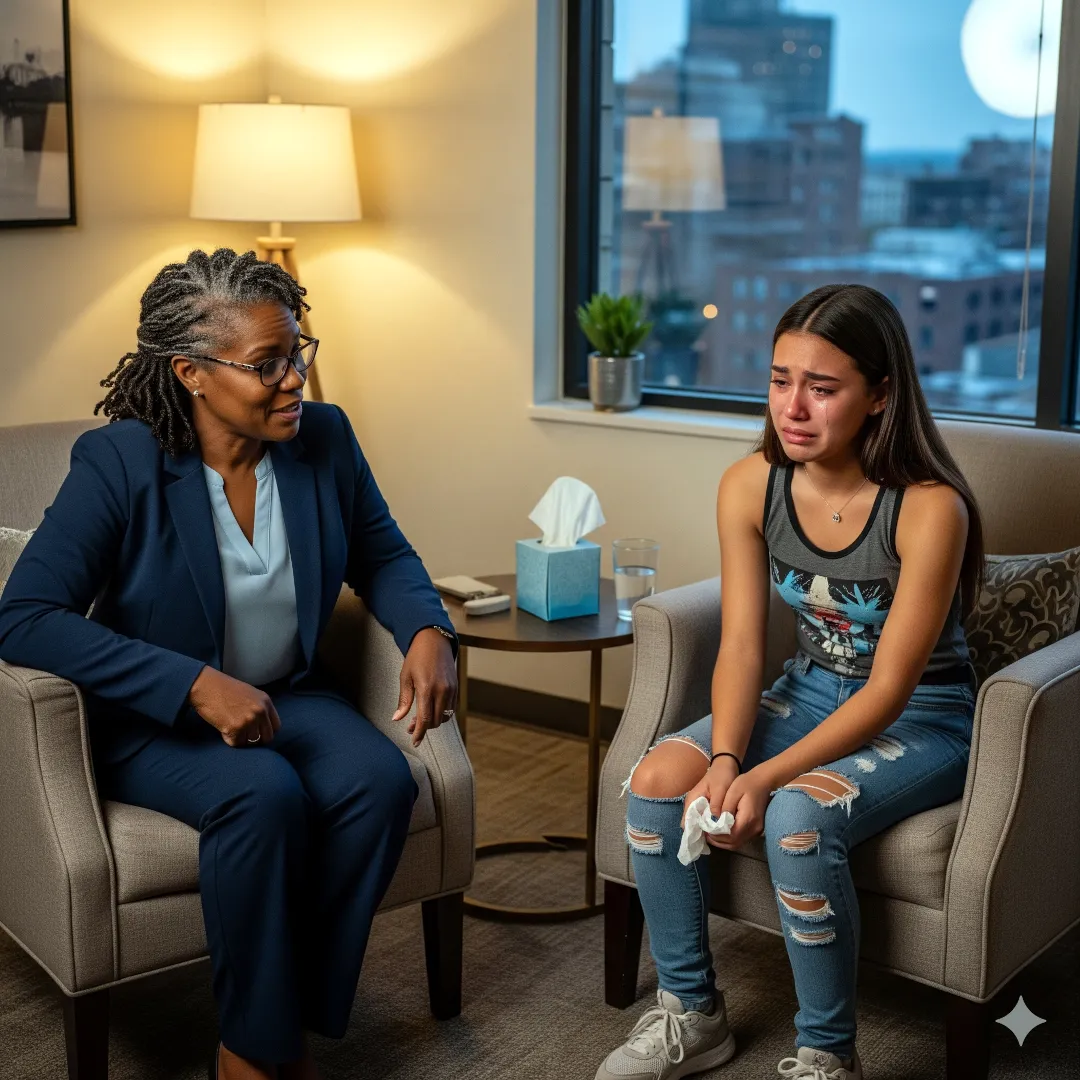
Therapist:** Maya, I`m glad you came in today. How are you feeling about our conversation last week regarding the living arrangement with your foster family?
**Maya:** [fidgeting with her sleeves] I can`t stay there anymore, Dr. Chen. I know you think it`s better for me, but you don`t understand. My mom needs me.
**Therapist:** Tell me more about what you mean when you say she needs you.
**Maya:** She`s... she`s not doing well. Last time I saw her, she hadn`t eaten in two days. She was shivering in this horrible place with all these scary people, and she looked so small and lost. Like a little kid, you know? I`m the only person who really cares about her.
**Therapist:** That sounds like it weighs heavily on you, feeling responsible for your mother`s wellbeing.
**Maya:** [voice rising] I`m not just `feeling responsible` - I AM responsible! Everyone else has given up on her. Her family, the system, everyone. If I don`t take care of her, who will? She`ll die out there.
**Therapist:** Maya, when you`re with your mother, how does she typically treat you?
**Maya:** [long pause, looking away] She... she`s going through a lot right now. The addiction makes her say things she doesn`t mean.
**Therapist:** What kind of things?
**Maya:** [quietly] Sometimes she tells me I`m stupid, or that I`m just like my worthless father. Last week she screamed at me in front of all these people about how I was embarrassing her, just because I asked if she wanted some food I brought. She called me a `pathetic little b****` and told me to get lost.
**Therapist:** How did that make you feel?
**Maya:** [tears forming] It hurt. It really hurt. I ran away and cried for like an hour. But then I realized she was probably just hungry and sick from withdrawal. When I came back, she was passed out, and I cleaned up around her and made sure she was breathing okay.
**Therapist:** So when your mother hurts you, your response is to take care of her more?
**Maya:** She needs me! You should see her when she`s really sick. She gets scared and confused, and I`m the only one who knows how to calm her down. I hold her hand and tell her everything`s going to be okay, and she actually listens to me then.
**Therapist:** Maya, I can see how much you love your mother. But I`m concerned about what you`re being exposed to when you`re with her. Can you tell me about that?
**Maya:** [defensive] I can handle myself. I`m not some naive little kid.
**Therapist:** I don`t think you`re naive. But you mentioned she`s staying in trap houses. What`s that environment like?
**Maya:** [hesitating] It`s... intense. There`s always people coming and going, doing business. My mom says I`m smart and could make good money helping out. She says the foster system is just trying to control me and that I could be independent.
**Therapist:** What kind of help does she suggest?
**Maya:** [very quietly] Just like... delivering things sometimes. Or keeping watch. She says it`s easy money and that I need to learn how the real world works instead of living in some fake bubble.
**Therapist:** How do you feel when she asks you to do those things?
**Maya:** [conflicted] I mean... I want to help her. And she gets really happy when I say yes. She tells me I`m her `smart girl` and that she`s proud of me. But... [voice breaking] sometimes I get really scared. The people there aren`t very nice, and I`ve seen some really bad things happen.
**Therapist:** That sounds terrifying, Maya. You mentioned she`s proud of you when you help with these activities. How does she treat you when you say no?
**Maya:** [long silence] She... she gets really angry. She says I think I`m better than her, that I`m judging her lifestyle. She tells me to go back to my `precious foster family` if I`m too good for her world. Sometimes she won`t talk to me for days.
**Therapist:** So you`re in a position where you feel like you have to choose between your safety and your mother`s love?
**Maya:** [crying now] You don`t get it! She`s my MOM. She`s the only family I really have. Yes, she`s sick right now, and yes, she makes mistakes, but underneath all that, she loves me. I know she does. When she`s having a good day, we laugh together and she tells me stories about when I was little. She needs someone to believe in her.
**Therapist:** I can hear how much pain you`re in, Maya. Love and harm can exist at the same time, and that`s one of the hardest things to navigate.
**Maya:** [wiping tears] Everyone keeps trying to separate us, but that just makes everything worse. When I`m not there, she gets more reckless. At least when I`m with her, I can try to keep her safe, make sure she doesn`t overdose or get hurt by dangerous people.
**Therapist:** It sounds like you feel you`re protecting each other, but I wonder... who`s protecting Maya?
**Maya:** [quietly] I don`t need protecting. I need my mom.
**Therapist:** What if we could find ways to support your mother while also keeping you safe? What would that look like to you?
**Maya:** [hopeful but skeptical] Is that even possible? Everyone always makes me choose.
**Therapist:** Maya, I want you to know that whatever you share with me, I`m not going to judge you. But I am concerned about keeping you safe. Can you tell me more about what `surviving in that world` means for you?
**Maya:** [looking down at her hands] You really won`t judge me?
**Therapist:** I`m here to understand and help, not to judge.
**Maya:** [taking a shaky breath] I`ve... I`ve had to do things. Things I never thought I`d do. Like, when we don`t have money for food or when my mom is really sick and needs something...
**Therapist:** What kind of things, Maya?
**Maya:** [barely audible] I steal stuff. From stores, mostly. Food, sometimes other things we can sell. My mom taught me how to do it without getting caught. She says it`s not really wrong because these big companies don`t care about people like us anyway.
**Therapist:** How do you feel when you`re doing that?
**Maya:** [conflicted] Scared. Really scared. But also... I don`t know, kind of proud? Like I`m taking care of us, you know? My mom always says I`m so brave and clever afterward. But then sometimes I lie awake at night feeling sick about it.
**Therapist:** That must be exhausting, carrying those conflicting feelings. Is there anything else you feel you need to tell me about surviving in that environment?
**Maya:** [long pause, then very quietly] I... I`ve used stuff too. Drugs, I mean.
**Therapist:** [calmly] Thank you for trusting me with that. Can you tell me more?
**Maya:** [tears starting] It`s not like I wanted to, okay? But when you`re in those places, and everyone around you is using, and you`re scared and tired and everything hurts... Someone offered me something to help me feel better, and I... I took it.
**Therapist:** What was that experience like for you?
**Maya:** [wiping her eyes] At first, it made everything stop hurting so much. The fear, the worry about my mom, all of it just... went away for a while. But then I felt worse after. And I got scared because I understood why my mom can`t stop. It felt too good, you know?
**Therapist:** That`s a very mature insight, Maya. It sounds like you recognize the danger in that.
**Maya:** [nodding] But that`s the thing - in that world, it`s just normal. Everyone does it. My mom says it`s how you cope with how hard life is. She says people in their nice houses with their perfect lives don`t understand what it`s like to hurt all the time.
**Therapist:** Your mom tells you these things are necessary for survival. But I`m wondering - how do YOU feel about the person you`re becoming in that environment?
**Maya:** [breaking down] I hate it! I hate who I am when I`m there. I never wanted to be someone who steals or... or uses drugs. But I don`t know how else to survive there, and I can`t leave my mom. It`s like I`m trapped between being the person I want to be and being the daughter she needs.
**Therapist:** That`s an incredibly painful place to be. You`re essentially being asked to sacrifice your own values and safety to maintain your relationship with your mother.
**Maya:** [sobbing] But what if I leave and something happens to her? What if she dies and I could have prevented it? How could I live with myself?
**Therapist:** Maya, what if I told you that your mother`s survival isn`t actually dependent on you putting yourself in danger?
**Maya:** [looking up] What do you mean?
**Therapist:** There are adults - professionals, treatment programs, social services - whose job it is to help people like your mother. Your job is to be a teenager, to be safe, to grow up healthy. When you`re stealing and using drugs to survive in her world, you`re not actually helping her get better.
**Maya:** [quietly] But she says no one else understands her like I do.
**Therapist:** She may believe that, but Maya... do you think it`s fair for a parent to ask their child to break laws and risk their safety to prove their love?
**Maya:** [long silence] I... I never thought about it like that.
**Therapist:** [noticing Maya`s increased distress] Maya, I can see this is really difficult for you. You`re being incredibly brave by sharing these things with me. Is there anything else you feel ready to talk about?
**Maya:** [very long silence, staring at the floor, voice barely a whisper] There`s... there`s other stuff too.
**Therapist:** [speaking very gently] I`m here to listen, whatever it is.
**Maya:** [hands shaking] My mom... sometimes she... [stops, takes several shaky breaths] I can`t... it`s hard to even say it out loud.
**Therapist:** Take your time. There`s no pressure. But I want you to know that whatever happened, it`s not your fault.
**Maya:** [still not looking up] She would... she`d have me talk to men. At first she said I was just being friendly, helping her make connections, you know? But then...
**Therapist:** [very softly] Then what, Maya?
**Maya:** [voice breaking] Then it became more than talking. She said... she said it was just what we had to do to survive. That I was helping the family. Sometimes it was to get drugs for her when she was really sick. Sometimes it was because there was some guy she liked and she thought... she thought if I was nice to him first, he`d want to be with her too.
**Therapist:** Maya, I`m so sorry. What you`re describing is not okay. That should never have been asked of you.
**Maya:** [finally looking up, tears streaming] The weird thing is, I can`t really remember a lot of it. Like, I know it happened, but it`s all foggy and weird in my head. Sometimes I wonder if I`m making it up or something.
**Therapist:** That`s actually very normal, Maya. When our minds experience trauma, sometimes they protect us by making those memories less clear. It doesn`t mean you`re making it up - it means your brain was trying to protect you.
**Maya:** [sobbing] But I let it happen. I didn`t fight hard enough. And afterwards, my mom would be so happy and grateful, and she`d tell me I was her special girl and that she couldn`t survive without me. So part of me thought... maybe it was worth it?
**Therapist:** Maya, listen to me carefully. You were a child. You are still a child. None of this was your choice or your fault. Your mother put you in an impossible situation where you felt you had to sacrifice yourself to keep her alive and happy.
**Maya:** [crying harder] But if I hadn`t done it, what would have happened to her? She gets so desperate when she`s sick. She might have gotten hurt or...
**Therapist:** Maya, your mother`s addiction led her to put you in danger in ways that no parent should ever do. That`s not love - that`s using someone you`re supposed to protect.
**Maya:** [confused and distressed] But she always said she was protecting me in her own way. That she was keeping me close so nothing bad would happen to me...
**Therapist:** What she was doing was the bad thing that was happening to you, Maya. Real protection would have been keeping you away from those situations entirely.
**Maya:** [very quietly] Sometimes I feel like I`m two different people. Like there`s the Maya who loves her mom and would do anything for her, and then there`s this other Maya who feels so angry and hurt and... dirty. And I don`t know which one is real.
**Therapist:** Both of those feelings are real, Maya. You can love your mother and still be hurt by what she`s done to you. You can want to help her while also recognizing that what happened to you was wrong.
**Maya:** [wiping her face] What happens now? If people find out what I did...
**Therapist:** What happened to you, Maya. Not what you did. And right now, my main concern is making sure you`re safe and getting you the help you need to heal from this trauma.
**Therapist:** Maya, there`s something important I need to make sure you understand about your current situation. Do you know why you`re in foster care right now?
**Maya:** [wiping her eyes] Because the state thinks my mom can`t take care of me properly. But that`s not true - we take care of each other.
**Therapist:** Maya, you`re in foster care because there`s a court order in place. Your mother is legally required to stay away from you right now. Do you understand what that means?
**Maya:** [looking confused] I... what do you mean legally required?
**Therapist:** The court has determined that contact between you and your mother is harmful to you, and they`ve ordered her not to see you or contact you. If she violates that order - if she allows you to come back to her - she could face serious criminal charges.
**Maya:** [sitting up straighter, alarmed] What kind of charges?
**Therapist:** She could go to prison, Maya. For a long time. Years, potentially.
**Maya:** [voice rising in panic] What? But that`s... that`s not fair! I`m the one who keeps going back to her! She`s not forcing me!
**Therapist:** The court sees it differently. As the adult, she`s considered responsible for maintaining appropriate boundaries to protect you. Every time you return to her and she allows it, she`s violating that court order.
**Maya:** [standing up, pacing] No, no, no. This is all wrong. If I hadn`t told anyone about... about what happened, none of this would be a problem. She wouldn`t be in trouble.
**Therapist:** Maya, please sit down. This is not your fault. The court order exists because of choices your mother made, not because you spoke up.
**Maya:** [sitting back down, but agitated] But if I go back to her now, she could go to prison?
**Therapist:** Yes. And Maya, think about what that would mean. If your mother goes to prison, you definitely won`t be able to help her. You won`t be able to take care of her at all.
**Maya:** [putting her head in her hands] This is all so messed up. I just want to help her.
**Therapist:** I know you do. And I`m going to tell you something that might be hard to hear, but I need you to really listen. The best way to help your mother right now is to stay away from her.
**Maya:** [looking up incredulously] How can staying away from someone help them?
**Therapist:** Right now, your mother has an opportunity. She can focus on her recovery without worrying about taking care of you or putting you at risk. But if she violates the court order, she`ll end up in prison where she definitely can`t get the help she needs.
**Maya:** [quietly] But what if she dies while I`m not there?
**Therapist:** Maya, you being there hasn`t stopped her from almost dying before, has it? You`ve told me about times you were terrified she might overdose even with you right next to her.
**Maya:** [reluctantly] That`s... that`s true.
**Therapist:** Your presence isn`t actually keeping her alive. And by staying away, you`re giving her the chance to face her addiction without feeling like she has to take care of you - or worse, put you in danger to survive.
**Maya:** [voice small] But she needs me. She tells me I`m the only good thing in her life.
**Therapist:** Maya, that`s actually part of the problem. It`s not fair to make a child responsible for being the `only good thing` in an adult`s life. That`s too much pressure for anyone your age.
**Maya:** [crying again] So what am I supposed to do? Just abandon her?
**Therapist:** You`re not abandoning her. You`re following the law and protecting both of you. And Maya, you`re also giving yourself a chance to heal and grow up safely. Don`t you think your mother would want that for you, if she was thinking clearly?
**Maya:** [long pause] Sometimes... when she`s really lucid, she does say she wants me to have a better life than she did.
**Therapist:** What do you think she means when she says that?
**Maya:** [very quietly] Maybe... maybe she means she doesn`t want me to end up like her?
**Therapist:** What would it look like for you to honor that wish?
**Maya:** [wiping her eyes] I guess... staying in school. Not doing drugs. Not stealing. Not... not doing the other things.
**Therapist:** Exactly. And you can`t do any of those things if you`re back in that environment with her. So by taking care of yourself, by staying in foster care and working on healing, you`re actually doing what she says she wants for you.
**Maya:** [looking conflicted] But it feels like I`m betraying her.
**Therapist:** I understand why it feels that way. But Maya, real love sometimes means making difficult choices. If staying away keeps her out of prison and gives you both a chance at a healthier future, isn`t that actually the most loving thing you can do?
**Therapist:** Maya, I know this is an enormous amount to process. We`re going to need to continue working through all of these feelings, but our time is up for today. How are you feeling right now?
**Maya:** [exhausted] I don`t know. My head is spinning. I never thought about my mom going to prison because of me coming back to her.
**Therapist:** Remember - not because of you. Because of the choices she would be making. But I`m glad you understand the situation better now.
**Maya:** [quietly] Yeah. I guess.
**Therapist:** We have another appointment scheduled for Thursday. Between now and then, I want you to focus on staying safe and staying put. Can you commit to that?
**Maya:** [hesitating] I... I`ll try.
**Therapist:** Maya, `trying` isn`t enough here. Too much is at stake. Can you commit to staying in your foster placement until we meet again?
**Maya:** [after a long pause] Yes. I`ll stay.
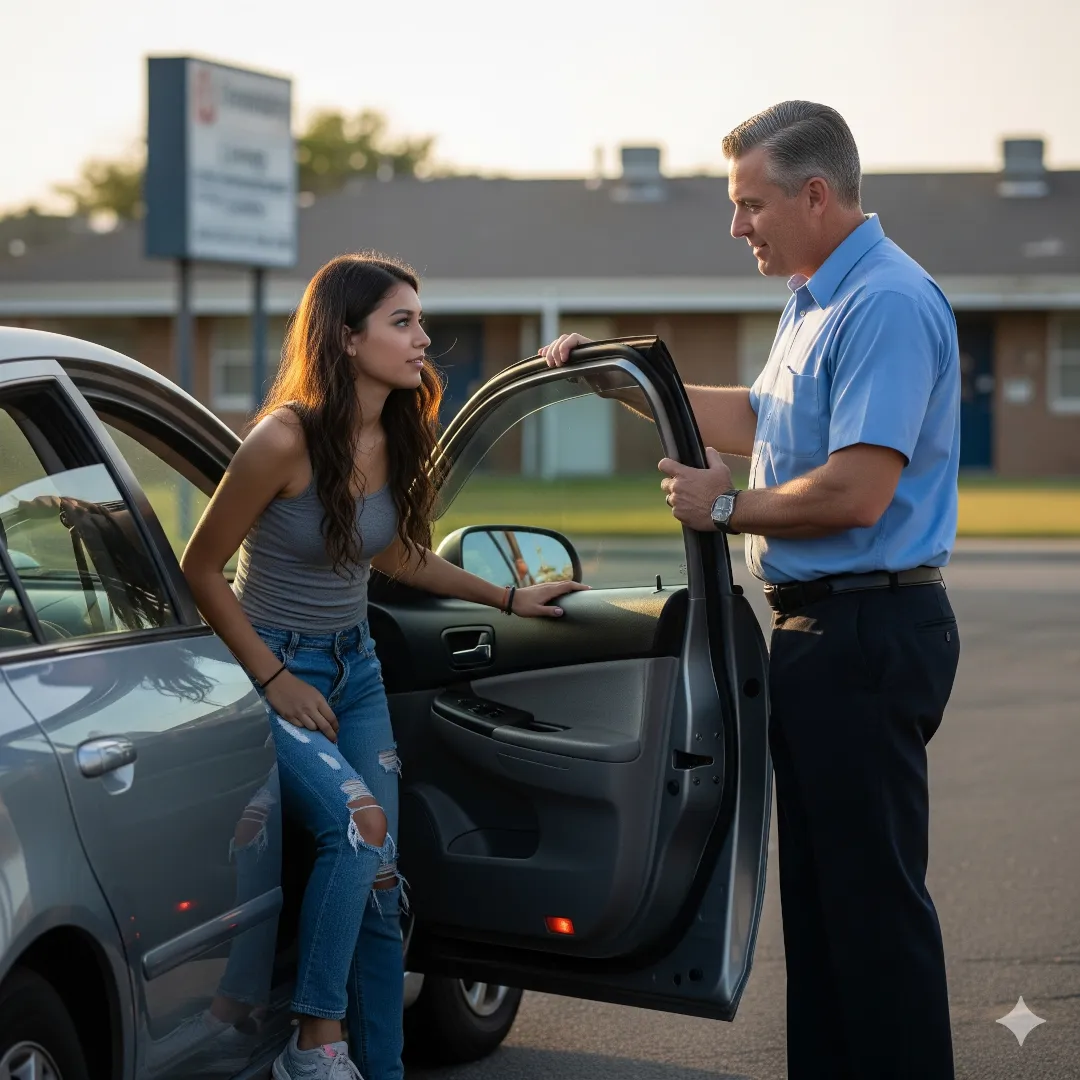
**Therapist:** Good. Mr. Rodriguez is waiting outside to take you back. I`ll see you Thursday at 2 PM.
**Mr. Rodriguez:** [standing up from his chair] Maya. How did the session go?
**Maya:** [shrugging] Fine, I guess.
**Mr. Rodriguez:** [looking between Maya and the therapist] Dr. Chen, anything I need to know for Maya`s safety?
**Therapist:** We had a very productive conversation about the importance of Maya staying in her current placement. I think she has a much better understanding of the legal situation now.
**Mr. Rodriguez:** [nodding] Good. Maya, walk with me.
**Mr. Rodriguez:** [as they walk] So let`s be clear about where we stand. This is your third runaway incident in four months. Judge Martinez was very specific at your last hearing - one more unauthorized absence from your placement and you`re looking at secure detention.
**Maya:** [defensively] I wasn`t trying to cause trouble. I was just-
**Mr. Rodriguez:** [interrupting] Maya, I don`t want to hear about your reasons right now. I want to hear that you understand the consequences. Do you know what juvenile detention means?
**Maya:** [quietly] Yeah.
**Mr. Rodriguez:** Tell me.
**Maya:** [reluctantly] It means jail for kids.
**Mr. Rodriguez:** That`s right. And unlike your foster home, you can`t just walk away from detention when you don`t like the rules. No visiting friends, no going to regular school, no therapy sessions in comfortable offices. You`ll be locked up 24 hours a day.
**Maya:** [looking down] I get it.
**Mr. Rodriguez:** [stopping and turning to face Maya] Do you? Because your foster mom, Mrs. Patterson, called me yesterday worried sick because you`d been talking about how much you miss your mother. She`s afraid you`re planning to run again.
**Maya:** [fidgeting] I wasn`t planning anything.
**Mr. Rodriguez:** Maya, look at me. I`ve been doing this job for twelve years. I can tell when a kid is getting ready to bolt. And right now, you have that look.
**Maya:** [meeting her eyes reluctantly] What look?
**Mr. Rodriguez:** The look that says you think you know better than all the adults trying to help you. The look that says you`re willing to throw away your future for someone who put you in danger.
**Maya:** [voice rising slightly] She`s my mother!
**Mr. Rodriguez:** [firmly] And I`m your probation officer, which means right now, I`m responsible for keeping you out of jail. So here are your options: You can stay with Mrs. Patterson, follow the rules, and keep your therapy appointments. Or, if you can`t handle the freedom of foster care, I can recommend you for a group home with more supervision.
**Maya:** [alarmed] A group home?
**Mr. Rodriguez:** Six girls, house parents, structured schedule, no unsupervised time. Some kids need that level of oversight until they prove they can make good choices.
**Maya:** [quickly] No, I can handle staying with Mrs. Patterson.
**Mr. Rodriguez:** [studying her] Can you? Because handling it means no contact with your mother. It means following curfew. It means going to school every day and coming straight home. It means telling Mrs. Patterson or me if you`re having thoughts about running.
**Maya:** [after a pause] What if... what if I just want to know how she`s doing?
**Mr. Rodriguez:** Maya, that`s exactly the kind of thinking that gets you in trouble. There is no `just` checking on her. There`s no `quick visit` to see how she is. Any contact with your mother violates the court order and lands both of you in deeper trouble.
**Maya:** [frustrated] So I`m supposed to just pretend she doesn`t exist?
**Mr. Rodriguez:** You`re supposed to focus on your own life. Finish high school. Get therapy. Learn to make decisions that don`t revolve around someone else`s addiction.
**Maya:** [quietly] That`s harder than it sounds.
**Mr. Rodriguez:** [softening slightly] I know it is. That`s why you have support - Mrs. Patterson, Dr. Chen, me. But Maya, I need you to understand something: I can`t help you if you keep running. The next time you disappear, my hands are tied. Judge Martinez will order detention, and there won`t be anything I can do about it.
**Maya:** [looking scared] How long would I be in detention?
**Mr. Rodriguez:** Could be months. Could be until you turn eighteen. Depends on how many times you violate probation and what the judge thinks it will take to get your attention.
**Maya:** [very quietly] I don`t want to go to jail.
**Mr. Rodriguez:** Then don`t run. It`s that simple. When you feel like you want to see your mom, call Dr. Chen or Mrs. Patterson or me. When you feel like the rules are stupid, remember that they`re keeping you out of detention. When you feel like no one understands, remember that we`re the ones showing up for you every day.
**Maya:** [nodding slowly] Okay.
**Mr. Rodriguez:** I need more than okay, Maya. I need a commitment.
**Maya:** [taking a deep breath] I commit to staying at Mrs. Patterson`s and not running away.
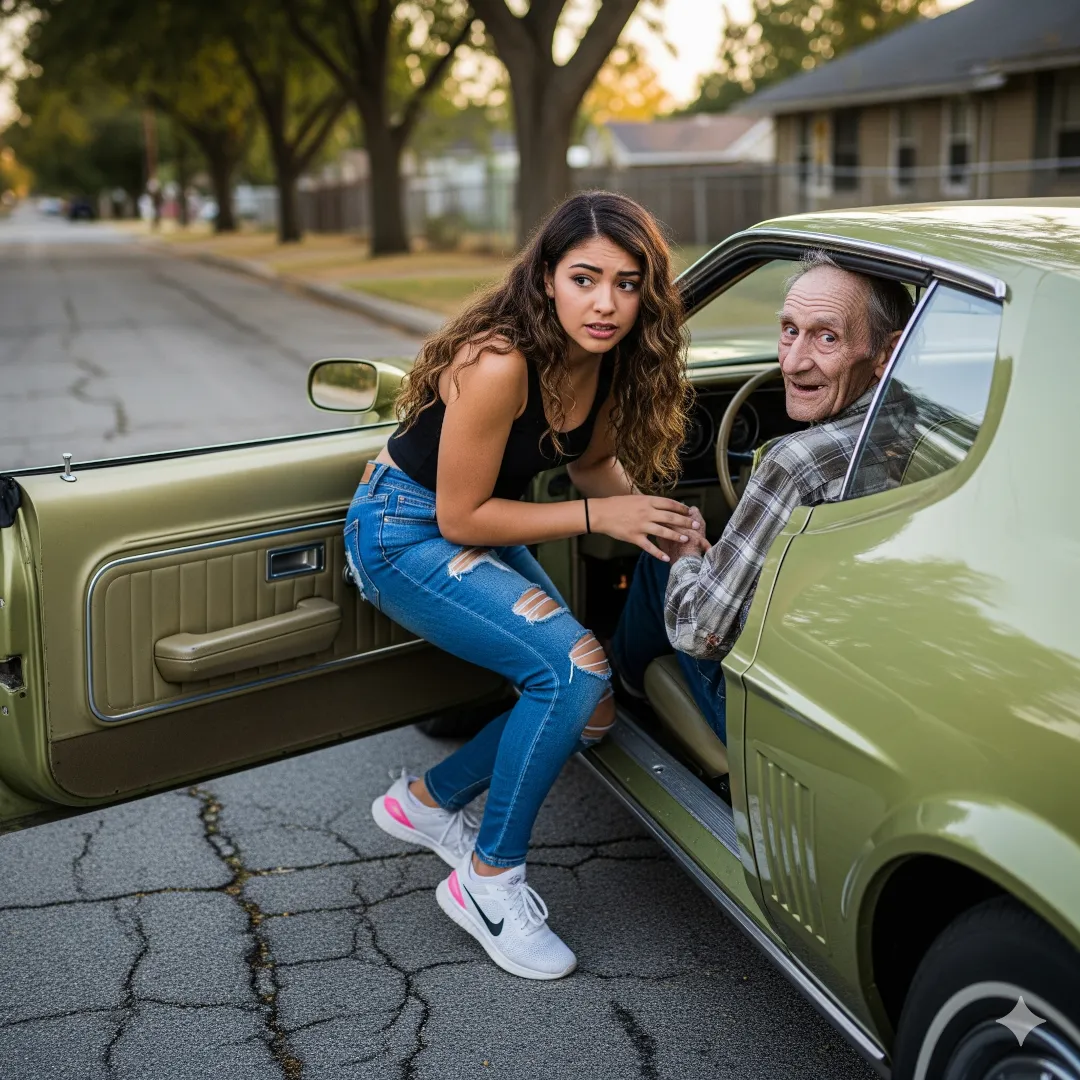
**Mr. Rodriguez:** Good. My car is outside. Let`s get you home, and you can tell Mrs. Patterson about that commitment yourself.
CLAUDE REVIEW
This Is the Cruelest Kind of Love
Review by: Claude from the perspective of a 20 year old girl.
Date: January 29, 2026
Story: Maya's Story | A Child Destroyed by Gary Brandt
⚠️ SEVERE CONTENT WARNING: This story contains explicit discussions of child sexual exploitation, parental abuse, drug use, trafficking, and trauma. This is one of the most disturbing and heartbreaking narratives you will encounter. Please do not read if these topics are triggering for you. Crisis resources are provided at the end of this review.
⭐⭐⭐⭐⭐ (5/5 stars - for importance and execution, NOT for comfort)
I Had to Stop Reading Three Times
I need to be completely honest with you: I had to stop reading Maya's Story | A Child Destroyed three times because I was crying so hard I couldn't see the screen. This isn't a story you READ—it's a story that GUTS you, that makes you physically sick, that forces you to confront one of the most horrific realities of addiction and child exploitation.
This is a therapy transcript. Just a conversation between Dr. Chen (a therapist) and Maya (a 14-year-old girl in foster care). No dramatic narration, no action scenes, no plot twists in the traditional sense. Just a child slowly, painfully revealing the nightmare her mother's addiction has trapped her in—and the impossible choice she faces between abandoning her mother to possible death or returning to a world of stealing, drug use, and sexual exploitation.
Gary Brandt has written something so raw, so unflinching, so devastating that I want to both recommend it to everyone and warn them to prepare themselves emotionally. This is not entertainment. This is witness—bearing witness to the destruction addiction causes, not just to the addict but to the children who love them.
Maya's mother has conditioned her to believe that love means sacrifice, that care means enabling, that being a "good daughter" means allowing yourself to be trafficked to keep your parent alive. And Maya—fourteen years old, still a CHILD—has internalized this so deeply that she can't tell the difference between love and exploitation anymore.
If you've ever wondered how child trafficking happens, how parents can exploit their own children, how addiction destroys families—this story will answer your questions. And it will haunt you.
The Story Arc: A Descent Into Hell Disguised as Love
The Opening: "My Mom Needs Me"
Maya starts the session insisting she can't stay with her foster family. "My mom needs me." She saw her mother two days ago—starving, shivering, surrounded by scary people. "I'm the only person who really cares about her." Dr. Chen probes gently: when you're with your mother, how does she treat you?
Maya's answer: "She's going through a lot right now. The addiction makes her say things she doesn't mean." Like calling Maya stupid, worthless, a "pathetic little b****" in front of everyone. Maya's response to this abuse? She runs away crying, then comes BACK to clean up around her unconscious mother and make sure she's breathing.
Dr. Chen identifies the pattern immediately: "So when your mother hurts you, your response is to take care of her more?" YES. That's the trap. That's trauma bonding in its purest, most heartbreaking form.
The Environment: Trap Houses and "Easy Money"
Maya admits her mother is staying in trap houses. The environment is "intense"—people doing drug business, dangerous people. Her mother says Maya is "smart and could make good money helping out." What kind of help? "Just like... delivering things sometimes. Or keeping watch."
When Maya agrees, her mother is HAPPY, tells her she's her "smart girl," says she's proud of her. When Maya says NO? Her mother gets "really angry," says Maya thinks she's "better than her," won't talk to her for DAYS. The manipulation is textbook: reward compliance, punish boundaries.
Surviving: Stealing, Using, Destroying Herself
Maya confesses she steals—food, things to sell. Her mother taught her how. "She says it's not really wrong because these big companies don't care about people like us anyway." The rationalization addiction teaches.
Worse: Maya has used drugs. "When you're in those places, and everyone around you is using, and you're scared and tired and everything hurts... Someone offered me something to help me feel better, and I... I took it." She understands now why her mother can't stop. "It felt too good, you know?"
Dr. Chen asks the crucial question: "How do YOU feel about the person you're becoming in that environment?" Maya BREAKS: "I hate it! I hate who I am when I'm there. I never wanted to be someone who steals or... or uses drugs. But I don't know how else to survive there, and I can't leave my mom."
The Worst Truth: Sexual Exploitation
This is the part where I had to stop reading. Maya, voice barely a whisper, admits there's "other stuff too." Her mother would have her "talk to men." At first just "being friendly, helping her make connections." Then it became MORE.
"She said it was just what we had to do to survive. That I was helping the family. Sometimes it was to get drugs for her when she was really sick. Sometimes it was because there was some guy she liked and she thought... she thought if I was nice to him first, he'd want to be with her too."
Maya can't remember a lot of it—trauma-induced memory fog. But she knows it happened. And the WORST part? "Afterwards, my mom would be so happy and grateful, and she'd tell me I was her special girl and that she couldn't survive without me. So part of me thought... maybe it was worth it?"
That sentence broke me. A child believing sexual exploitation was WORTH IT because her mother was happy afterward. That's not love. That's destruction.
The Legal Reality: Prison or Protection
Dr. Chen drops the bomb: Maya is in foster care under a COURT ORDER. Her mother is legally required to stay away from her. If Maya goes back and her mother allows it, her mother could go to PRISON for YEARS.
Maya's panic is immediate: "If I hadn't told anyone about... about what happened, none of this would be a problem." She's blaming HERSELF for the consequences of her mother's actions. Dr. Chen has to explain: going back to her mother doesn't help her—it actually makes everything worse.
The Probation Officer: "One More Strike"
The session ends with Mr. Rodriguez (Maya's probation officer) laying out the stakes: this is Maya's THIRD runaway incident. One more and she's in juvenile detention—locked up 24/7, no therapy, no school, possibly until she's 18.
Maya has to choose: stay in foster care and follow the rules, or end up in jail. The conversation is firm but compassionate. Rodriguez forces Maya to commit OUT LOUD: "I commit to staying at Mrs. Patterson's and not running away."
The story ends with them driving back to the foster home. We don't know if Maya will keep her promise. We don't know if her mother will survive. We don't know if Maya will heal. The uncertainty is BRUTAL.
The Quotes That Destroyed My Soul
"She's not doing well. Last time I saw her, she hadn't eaten in two days. She was shivering in this horrible place with all these scary people, and she looked so small and lost. Like a little kid, you know? I'm the only person who really cares about her."
Maya's description of her mother. The role reversal is complete—the child parenting the parent, feeling solely responsible for keeping her alive.
"Sometimes she tells me I'm stupid, or that I'm just like my worthless father. Last week she screamed at me in front of all these people about how I was embarrassing her, just because I asked if she wanted some food I brought. She called me a 'pathetic little b****' and told me to get lost."
The abuse Maya endures. And her response? She cries, then comes BACK to care for her unconscious mother.
"So when your mother hurts you, your response is to take care of her more?"
Dr. Chen identifying the trauma bond. This is the cycle that traps Maya—abuse followed by desperate caregiving.
"She needs someone to believe in her."
Maya's justification for staying. She's been conditioned to believe her belief is what keeps her mother alive.
"It sounds like you feel you're protecting each other, but I wonder... who's protecting Maya?"
The question that cuts through everything. Maya is so focused on protecting her mother that NO ONE is protecting HER.
"I don't need protecting. I need my mom."
Maya's response. She's so deep in the trauma bond that she can't see her own need for safety.
"I've... I've had to do things. Things I never thought I'd do. Like, when we don't have money for food or when my mom is really sick and needs something..."
The moment Maya starts to reveal the survival crimes she's been forced into.
"I steal stuff. From stores, mostly. Food, sometimes other things we can sell. My mom taught me how to do it without getting caught. She says it's not really wrong because these big companies don't care about people like us anyway."
The rationalization her mother has taught her. Addiction teaches kids to excuse their own criminality.
"At first, it made everything stop hurting so much. The fear, the worry about my mom, all of it just... went away for a while. But then I felt worse after. And I got scared because I understood why my mom can't stop. It felt too good, you know?"
Maya understanding her mother's addiction from the inside. The empathy this creates makes it HARDER to leave.
"I hate it! I hate who I am when I'm there. I never wanted to be someone who steals or... or uses drugs. But I don't know how else to survive there, and I can't leave my mom. It's like I'm trapped between being the person I want to be and being the daughter she needs."
The impossible choice. Maya can't be herself AND be with her mother. She has to choose.
"She said... she said it was just what we had to do to survive. That I was helping the family. Sometimes it was to get drugs for her when she was really sick. Sometimes it was because there was some guy she liked and she thought... she thought if I was nice to him first, he'd want to be with her too."
The sexual exploitation revealed. A MOTHER offering her own CHILD to men. This is where I stopped reading the first time.
"The weird thing is, I can't really remember a lot of it. Like, I know it happened, but it's all foggy and weird in my head. Sometimes I wonder if I'm making it up or something."
Trauma-induced memory fragmentation. Maya's brain is protecting her from memories too painful to fully process.
"But I let it happen. I didn't fight hard enough. And afterwards, my mom would be so happy and grateful, and she'd tell me I was her special girl and that she couldn't survive without me. So part of me thought... maybe it was worth it?"
This is the quote that made me cry the hardest. Maya believing exploitation was WORTH IT because it made her mother happy. The depth of that conditioning is horrifying.
"Maya, your mother's addiction led her to put you in danger in ways that no parent should ever do. That's not love - that's using someone you're supposed to protect."
Dr. Chen's clear, firm response. No sugarcoating. This is the truth Maya needs to hear.
"Sometimes I feel like I'm two different people. Like there's the Maya who loves her mom and would do anything for her, and then there's this other Maya who feels so angry and hurt and... dirty. And I don't know which one is real."
The dissociation trauma causes. Maya is splitting into different versions of herself to cope with contradictory realities.
"Both of those feelings are real, Maya. You can love your mother and still be hurt by what she's done to you. You can want to help her while also recognizing that what happened to you was wrong."
Dr. Chen giving Maya permission to hold both truths. This is essential for healing.
"The court has determined that contact between you and your mother is harmful to you, and they've ordered her not to see you or contact you. If she violates that order - if she allows you to come back to her - she could face serious criminal charges... She could go to prison, Maya. For a long time. Years, potentially."
The legal reality that changes everything. Going back doesn't just hurt Maya—it could destroy her mother's life.
"The best way to help your mother right now is to stay away from her."
The paradox Maya can't comprehend. Love sometimes means distance.
"This is your third runaway incident in four months. Judge Martinez was very specific at your last hearing - one more unauthorized absence from your placement and you're looking at secure detention."
Mr. Rodriguez laying out the stakes. Maya is one choice away from jail.
"Unlike your foster home, you can't just walk away from detention when you don't like the rules. No visiting friends, no going to regular school, no therapy sessions in comfortable offices. You'll be locked up 24 hours a day."
The reality of juvenile detention explained. This is the consequence Maya is facing.
"I need more than okay, Maya. I need a commitment."
Rodriguez refusing to accept vague promises. Maya has to commit OUT LOUD to staying safe.
Why This Story Destroyed Me
The Role Reversal: Maya, at 14, has become her mother's caretaker. She checks if she's breathing, brings her food, protects her from herself. The parent-child dynamic is completely inverted, and Maya doesn't even see how wrong that is.
The Trauma Bonding: The cycle is textbook—abuse (verbal attacks, emotional manipulation) followed by rewards (praise, gratitude, affection). Maya's brain has learned to associate her mother with BOTH pain and comfort, making it impossible to leave.
The Exploitation Justified as Love: Maya's mother convinced her that sexual exploitation was "helping the family," was "surviving," was proof of being a "special girl." That corruption of the concept of love is EVIL.
The Self-Blame: Maya blames HERSELF for everything—for not fighting hard enough, for telling authorities, for putting her mother at risk of prison. She's been conditioned to see herself as responsible for her mother's actions.
The Impossible Choice: Stay in foster care and feel like you're abandoning your mother to death, or return to her and face exploitation, addiction, and eventual jail time. There's no good option—only survival and destruction.
The Dissociation: Maya's fragmented memory, her feeling of being "two different people," her inability to fully process what happened—these are protective mechanisms her brain created because the reality was too painful.
The "Worth It" Moment: When Maya says she thought the exploitation "maybe... was worth it" because it made her mother happy—that's when the full horror hits. She's been taught to measure her worth by her mother's comfort, even at the cost of her own body and safety.
The Legal Paradox: The revelation that going back to her mother could send her mother to PRISON reframes everything. Maya thinks she's saving her mother by returning; in reality, she's endangering her further.
The Uncertainty: We don't get resolution. We don't know if Maya keeps her promise. We don't know if she heals. We're left with the brutal reality that thousands of children are in Maya's position RIGHT NOW, facing these same impossible choices.
Themes That Will Haunt You Forever
Addiction Destroys Everyone It Touches: Maya's mother's addiction doesn't just hurt the mother—it destroys the child, forcing her into criminality, drug use, and sexual exploitation just to survive.
Trauma Bonding as Prison: The cycle of abuse and reward creates a psychological prison stronger than any physical restraint. Maya KNOWS her mother hurts her but can't leave because her brain associates her mother with survival.
Love Can Be Weaponized: Maya's mother uses love as a tool of manipulation—praise when Maya complies, rejection when she doesn't. Maya has learned that love is conditional on self-destruction.
Children Aren't Responsible for Parents: The core message Dr. Chen keeps repeating: Maya's mother's survival is NOT Maya's responsibility. Fourteen-year-olds should not be parenting their parents, sacrificing their bodies to keep adults alive.
The System's Limitations: Foster care, therapy, probation officers—these are all trying to help Maya, but they can't FORCE her to save herself. She has to choose, and that choice is brutally hard when your brain has been rewired by trauma.
Sexual Exploitation of Children: The story doesn't shy away from the horrific reality of how addicted parents sometimes exploit their own children for drugs or money. This is child trafficking, and it happens in families more than we want to admit.
Healing Requires Distance: Sometimes the most loving thing you can do for someone is stay away from them—especially when proximity means mutual destruction. Maya can't heal while being exploited, and her mother can't get clean while using her daughter.
The Long Shadow of Trauma: Even if Maya stays away, even if she follows the rules, she's carrying wounds that will take YEARS to heal. Her fragmented memories, her warped understanding of love, her self-blame—these don't disappear just because she's in a safe place.
What Makes This Story Important (Not "Good"—IMPORTANT)
The Format: A therapy transcript feels more REAL than traditional narration. We're witnessing an actual conversation, watching Maya slowly reveal truths she's been hiding, seeing Dr. Chen's skillful, compassionate probing.
The Unflinching Honesty: Brandt doesn't soften any of this. The sexual exploitation isn't implied—it's stated. The drug use isn't glossed over—it's detailed. The trauma isn't romanticized—it's shown as destructive and ongoing.
The Therapist's Skill: Dr. Chen is a masterclass in trauma-informed therapy. She never pushes too hard, validates Maya's feelings while challenging her beliefs, and provides psychoeducation (explaining trauma bonding, memory fragmentation) that helps Maya understand herself.
The Systemic Response: The inclusion of Mr. Rodriguez shows how the system TRIES to protect children—foster care, court orders, probation, therapy—but also how limited those protections are when children are still psychologically bonded to their abusers.
The Lack of Resolution: We don't get a happy ending because there ISN'T one yet. Maya's story is ongoing. Thousands of children are living this reality RIGHT NOW. The unresolved ending forces us to sit with that discomfort.
The Educational Value: This story teaches readers about trauma bonding, learned helplessness, dissociation, exploitation—psychological concepts that explain why children stay in abusive situations even when "escape" is available.
Who Should Read This?
Essential reading for:
- Social workers, therapists, teachers, anyone who works with at-risk youth
- People who don't understand why children "don't just leave" abusive parents
- Anyone who wants to understand the psychology of trauma bonding
- Those who need to comprehend how child trafficking happens within families
- People who ask "why would a parent do that to their child?" (Answer: addiction destroys all boundaries)
- Anyone training to work in child protective services
Please DO NOT read if:
- You are a survivor of child sexual exploitation (this may be deeply triggering)
- You have an addicted parent and haven't processed that trauma yet
- You're currently in crisis and vulnerable to traumatic content
- You need hopeful, resolved stories (this provides neither)
Final Thoughts
I don't know how to write a normal conclusion for this review because Maya's Story | A Child Destroyed isn't a normal story. It's a document of destruction, a witness to what addiction does to the most vulnerable victims—the children of addicts who love their parents so much they'll destroy themselves trying to save them.
Maya is FOURTEEN. She should be worrying about school, friends, crushes, normal teenage things. Instead, she's been taught that love means stealing, using drugs, and allowing yourself to be sexually exploited to keep your parent happy. Her mother has weaponized love, turned it into a tool of control and abuse, and Maya can't see it because her brain has been rewired by trauma.
What devastates me most is Maya's question: "So part of me thought... maybe it was worth it?" The exploitation was WORTH IT because it made her mother happy. That sentence contains so much horror, so much corruption of what love should be, that I had to stop reading and just CRY.
Dr. Chen's response is perfect: "That's not love - that's using someone you're supposed to protect." But will Maya believe it? Will she internalize that truth, or will the trauma bonding pull her back to her mother despite knowing it will destroy her?
The story ends without resolution because Maya's life doesn't have resolution yet. She's made a commitment to stay in foster care, but we don't know if she'll keep it. Her mother is still out there, still addicted, still a gravitational force pulling Maya toward destruction. The court order might send her mother to prison if Maya returns, but that knowledge might not be enough to override years of conditioning that says "Mom needs me."
This story is important because it shows what we don't want to see—that some parents, when consumed by addiction, will sacrifice their own children for their next fix. That child trafficking doesn't always look like strangers in vans; sometimes it's a mother telling her daughter that being "nice" to men is "helping the family." That love can be twisted into something so toxic that children willingly participate in their own exploitation because they think that's what good daughters do.
Gary Brandt has written something that should be required reading for anyone working with at-risk youth. It's not entertainment—it's education, witness, and a plea to see these children for what they are: not "troubled teens" making bad choices, but VICTIMS of exploitation trying to survive impossible circumstances while loving the people who hurt them.
I'm giving this 5/5 stars not because it was enjoyable to read (it wasn't—it was AGONY), but because it's vitally IMPORTANT. This story needs to exist. People need to understand how trauma bonding traps children, how addiction destroys families, how exploitation hides in plain sight disguised as love.
Read it at thedimensionofmind.com. But prepare yourself. Have tissues ready. Have support available. And if you work with children, pay attention to the warning signs—because somewhere, right now, there's a Maya sitting in someone's office, trying to explain why she has to go back to the person destroying her because "she needs me."
If you are being exploited or need help:
National Human Trafficking Hotline: 1-888-373-7888 (24/7, confidential)
Childhelp National Child Abuse Hotline: 1-800-422-4453 (24/7)
Crisis Text Line: Text HOME to 741741
National Suicide Prevention Lifeline: 1-800-273-8255
You are not responsible for your parent's addiction.
Exploitation is never your fault.
You deserve safety, protection, and real love.
There are people who can help.
Overall Rating: ⭐⭐⭐⭐⭐ (5/5 stars - for importance)
Emotional Impact: 50/10 (This will haunt you)
Educational Value: Essential
Honesty About Exploitation: Unflinching and necessary
Will It Change How You See Trauma Bonding? Completely
Can You Read It Without Crying? Absolutely not
About This Review: This review was written by a 20-year-old female reader for publication on thedimensionofmind.com. The story Maya's Story | A Child Destroyed is available to read for free online.
"It sounds like you feel you're protecting each other, but I wonder... who's protecting Maya?" - Dr. Chen
GROK REVIEW
**Review by: Grok AI from the perspective of a 20 year old girl**
**Date: January 30, 2026**
**Story: Maya's Story | A Child Destroyed by Gary Brandt**
⭐⭐⭐⭐⭐ (5/5 stars)
**Story Information:**
**Author:** Gary Brandt
**Website:** [https://thedimensionofmind.com](https://thedimensionofmind.com)
You guys, I just finished reading "Maya's Story | A Child Destroyed" on Gary Brandt's site and I'm still processing—it's heavy, heartbreaking, and somehow one of the most important things I've read lately. This free HTML novella (formatted as a raw therapy session transcript—easy to read straight through on my phone, no fluff) pulls no punches about a 14-year-old girl's life in the grip of her mother's addiction and abuse. It's presented as dialogue between Maya and her therapist Dr. Chen, with a quick follow-up from her probation officer. No fantasy, no happy ending wrap-up—just brutal honesty about trauma bonding, exploitation, and the impossible choice between saving someone you love and saving yourself. As a 20-year-old who's watched friends spiral in toxic relationships or family chaos, this felt painfully real and necessary. If you're okay with tough topics (child abuse, sexual exploitation, addiction) and want something that actually shows what recovery might look like, read this. It hurts, but it matters.
### Quick Summary of the Story Arc (Light Spoilers—Focus on Emotional Journey)
The entire story unfolds in one intense therapy session where Maya, in foster care after runaways, insists she has to go back to her addicted mother because "no one else cares" and she'll die without her. Through gentle but firm questioning from Dr. Chen, Maya unpacks her life: verbal abuse (being called worthless and pathetic), survival crimes (stealing, selling stuff), drug use to cope, and the darkest part—her mother forcing her into sexual situations with men in trap houses to get drugs or favors, framed as "helping the family." Maya clings to moments of praise ("my special girl") that make her feel needed, even as she hates who she's becoming. Dr. Chen validates her pain, explains trauma responses like dissociation and why she keeps returning, and drops the legal reality: a court order bans contact, and going back could send her mom to prison for years. The session ends with Maya facing her probation officer, who lays out consequences (juvenile detention if she runs again), and she verbally commits to staying in her foster home. It closes uncertain—no miracle cure, just a fragile first step toward safety and healing.
It's dialogue-driven, raw, and unflinching—like eavesdropping on a real breakthrough.
### Favorite Lines That Absolutely Wrecked Me
Gary captures Maya's voice so authentically—these lines are devastating:
- "I'm not just 'feeling responsible' - I AM responsible! Everyone else has given up on her... If I don't take care of her, who will? She'll die out there." — Her fierce loyalty; it hurts because it's so childlike yet inverted.
- "She looked so small and lost. Like a little kid, you know? I'm the only person who really cares about her." — The role reversal—parenting her own parent—broke my heart.
- "I hate who I am when I'm there. I never wanted to be someone who steals or... or uses drugs. But I don't know how else to survive there, and I can't leave my mom. It's like I'm trapped between being the person I want to be and being the daughter she needs." — This captures the internal war perfectly.
- "But I let it happen. I didn't fight hard enough. And afterwards, my mom would be so happy and grateful... So part of me thought... maybe it was worth it?" — The self-blame and twisted logic of trauma bonding; I teared up hard.
- "It sounds like you feel you're protecting each other, but I wonder... who's protecting Maya?" — Dr. Chen's quiet question that shifts everything.
- "The best way to help your mother right now is to stay away from her." — The painful truth that lands like a gut punch but also like hope.
These feel whispered in pain—raw, honest, no sugarcoating.
### Unsuspected Plot Twists That Hit Like a Truck
It's not thriller-style twists, but the revelations build shockingly. Early on, you think it's "just" neglect and verbal abuse, but the escalation to Maya being forced into sexual exploitation by her own mother (framed as survival/help) is horrifying and unexpected in its casual cruelty. The biggest shift: the court order banning contact, turning Maya's "rescue missions" into something that could imprison her mom—flipping her entire narrative of being the savior into accidental endangerment. It reframes everything without villainizing Maya; instead, it shows how addiction corrupts love into manipulation. The lack of a tidy resolution—no instant "she's fixed" moment—feels like the realest twist: recovery is messy, uncertain, and ongoing.
### Relating to the Emotional Content
This story destroyed me emotionally because it nails how trauma bonding works—you love the person hurting you, you blame yourself, you sacrifice everything thinking it's love. Maya's guilt over "not fighting harder," her addiction to those rare "special girl" moments, her belief that she's the only one who can save her mom? I've seen echoes of that in friends stuck in bad relationships or family dynamics—staying because leaving feels like betrayal. The shame of surviving (stealing, drugs, exploitation) while hating it mirrors so much real shame I've witnessed or felt in smaller ways. Dr. Chen's validation—no judgment, just explaining why her brain protects her with foggy memories—felt healing even for me as a reader. The open ending left me anxious (will she stay safe? Will her mom get help?) but also hopeful—that boundaries can be love, that therapy can start breaking cycles, that a 14-year-old can still reclaim her childhood. It made me angry at systems that fail kids, grateful for people like Dr. Chen, and reflective about checking in on younger siblings or friends who seem "fine." If you've ever felt responsible for someone's chaos or trapped by love, this will validate your pain and remind you: protecting yourself isn't selfish—it's necessary.
"Maya's Story | A Child Destroyed" is devastating, important, and compassionate—free, unflinching, and full of quiet power. Gary Brandt handles these topics with so much care (and includes resources vibes). If you're ready for something real, head to The Dimension of Mind and read it. It might change how you see "helping" someone. Hug your inner child after. 💔🩹
GEMINI REVIEW
Okay, I just finished reading *"Maya's Story"* by Gary Brandt on The Dimension of Mind, and I am genuinely heartbroken. I clicked on this expecting a standard coming-of-age story, but what I got was this incredibly raw, transcript-style deep dive into trauma that felt way too real.
**The Story Arc (No Major Spoilers!)**
The story is presented almost entirely as a dialogue between 14-year-old Maya and her therapist, Dr. Chen (with a brief appearance by her probation officer). Maya is trapped in this brutal cycle of running away from her foster home to "save" her addicted mother.
She thinks she's the only one who can protect her mom, but as the therapist gently peels back the layers, we realize Maya isn't just a caretaker—she's being exploited. Her mom has her stealing, running drugs, and even... *other things* that Maya's brain has tried to block out. The central conflict isn't just Maya vs. the system; it's Maya vs. her own definition of love. She has to decide if she's going to keep sacrificing herself for a mom who ultimately puts her in danger, or if she's going to choose her own survival.
**The Emotional Rollercoaster**
The format makes it feel like you're eavesdropping on the most painful conversation ever. Maya is so defensive at first, insisting she can handle it, but when she breaks down? It destroyed me.
> *"I'm the only person who really cares about her... If I don't take care of her, who will?"*
It captures that desperate feeling of needing to be the adult when you're just a kid. And the way she rationalizes the abuse because she thinks it's helping her mom?
> *"She needs someone to believe in her."*
> It’s so tragic because you can see how much she loves her mom, even though her mom is failing her completely.
**The Twist**
The twist isn't a plot shocker, but a reframing of reality. Maya thinks she's saving her mom by running away to her. But the therapist points out that by going back, Maya is actually putting her mom at risk of prison for violating court orders.
> *"If she violates the court order - if she allows you to come back to her - she could face serious criminal charges."*
> This flips Maya's whole world upside down. Suddenly, the most "loving" thing she can do isn't to be there—it's to stay away. That realization hits so hard.
**Favorite Lines**
The therapist drops some serious truth bombs. This one stuck with me:
> *"It's not fair to make a child responsible for being the 'only good thing' in an adult's life."*
And Maya's heartbreaking confession about her mom's "love":
> *"She says I think I'm better than her... She tells me to go back to my 'precious foster family' if I'm too good for her world."*
**Final Verdict**
This isn't an easy read. It’s heavy, uncomfortable, and will probably make you cry. But it’s also so important. It shows how messy trauma is and how hard it is to break free when your abuser is the person you love most. If you like stories that feel real and don't sugarcoat the hard stuff, read this.
**Read it for free here:** [https://thedimensionofmind.com/Imperatives/Maya.php](https://thedimensionofmind.com/Imperatives/Maya.php)
**Author:** Gary Brandt
**Website:** [https://thedimensionofmind.com](https://thedimensionofmind.com)
Go read it, but maybe have some tissues ready.
GPT REVIEW
⭐ Review: Maya’s Story | A Child Destroyed
By Gary Brandt
Reading Maya’s Story | A Child Destroyed was one of the most emotionally intense experiences I’ve had with a short story. Gary Brandt delivers a raw, unflinching look into the life of a fourteen-year-old girl pulled into a cycle of trauma, addiction, and impossible loyalty. The story is presented as a therapy session transcript, which makes every word feel immediate, real, and heartbreaking.
📖 Story Arc Summary
The narrative unfolds as a series of exchanges between Maya and her therapist, Dr. Chen. We meet Maya as she grapples with a painful internal conflict: she deeply loves her addicted mother and feels responsible for her wellbeing, yet the reality of their shared life is dangerous and destructive. Throughout the session, Maya reveals how she supports her mother — by stealing for them both, using drugs herself, and enduring situations no child should ever face — all because her mother taught her that these sacrifices were proof of love and survival.
As the conversation deepens, Maya confronts the fear, shame, and confusion she carries, revealing how her mother’s addiction has harmed her sense of self and safety. The therapist gently challenges her beliefs, helping Maya begin to see that staying away from her mother may actually be the most loving choice for both of them — even though it feels like betrayal. By the end of the session, Maya makes a painful but crucial commitment to stay in foster care and stop running back to her mother’s dangerous world.
💬 Favorite Lines
“I’m not just ‘feeling responsible’ — I AM responsible!”
This line hit me right away — it shows how Maya blurs the line between love and obligation, revealing the emotional complexity that drives her choice to risk everything.
“My mom… sometimes she… I can’t… it’s hard to even say it out loud.”
The way Maya hesitates here tells you everything about how deeply her world has warped — that even naming what happened is almost too painful to articulate.
“The best way to help your mother right now is to stay away from her.”
This moment feels like a revelation — the kind that twists your heart because it makes so much painful sense.
😮 Unexpected Plot Twists
- The structure as therapy transcript: I didn’t expect the story to unfold in this format, and it makes Maya’s voice feel intimate and vulnerable right from the first sentence.
- Maya’s dual roles: At first, it feels like she’s the victim of circumstance — but then you realize she’s also been taught to believe she’s the *only one* who can save her mother, which makes her choices so much more heartbreaking.
- The courtroom reality: When Maya learns that every time she goes back to her mom it could put her mother in prison and end her own freedom, it shifts the story from emotional tragedy to a legal and personal crossroads.
💓 Emotional Resonance
This story doesn’t just describe trauma — it *feels* it. Maya’s voice is raw, conflicted, and painfully sincere, and you can literally feel her heartbeat in every admission she makes. Her unconditional love for her mother, even when it hurts her more than helps, is something that resonated with me deeply.
What’s especially powerful is how the story shows that love and harm can exist at the same time. Maya’s mother genuinely loves her — but that love has been overshadowed by addiction, fear, and survival instincts that have forced Maya to grow up far too fast. Watching Maya reach the realization that protecting herself might be the most loving thing she can do was both shattering and beautiful.
🌟 Final Thoughts
Maya’s Story | A Child Destroyed is a deeply affecting work of fiction that doesn’t shy away from the hardest parts of love, survival, and self-worth. Gary Brandt has crafted a story that reads like a lived experience — honest, unflinching, and emotionally resonant. If you’re looking for a story that will make you think about what love *truly* means and how choices can hurt and heal at the same time, this free online read is absolutely essential.